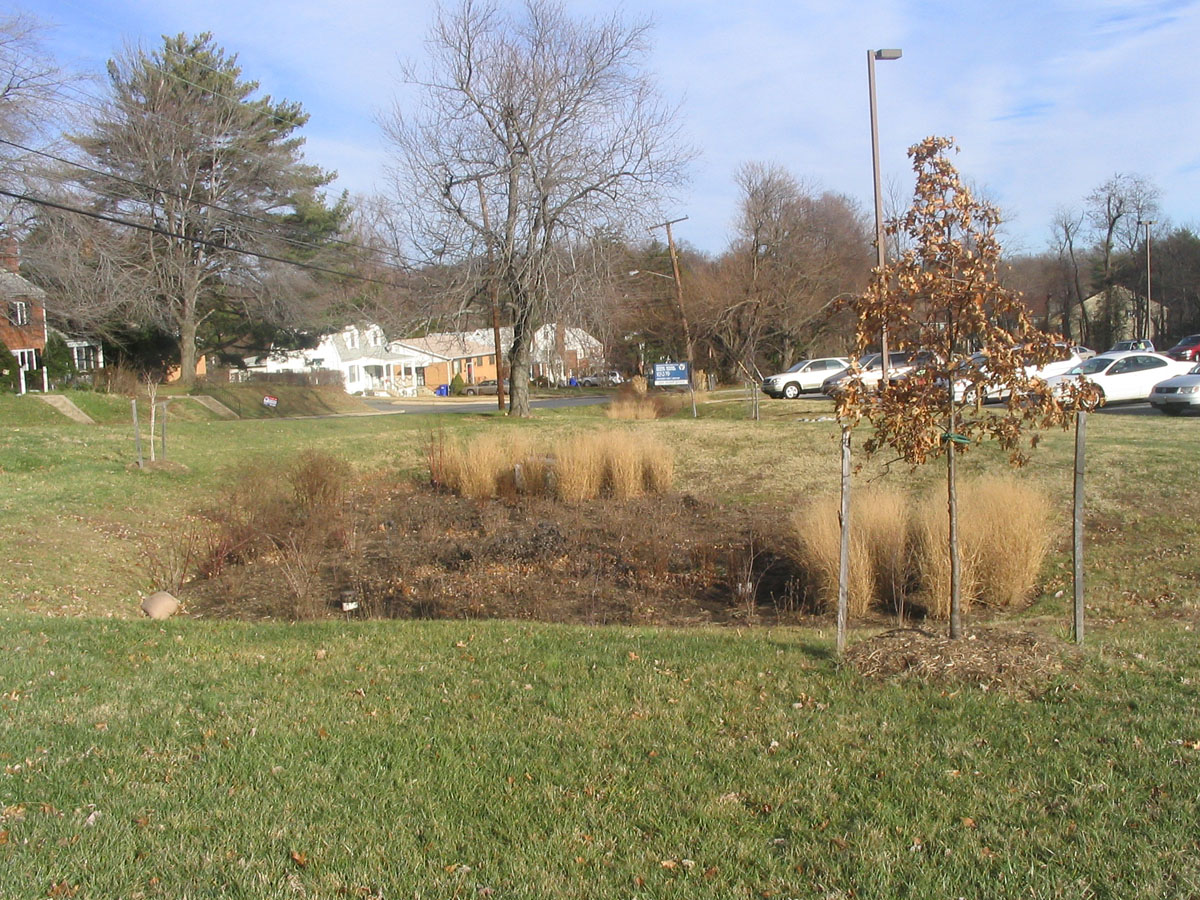
Why soil mix matters
The soil profile in a rain garden performs two functions simultaneously: it holds water during a storm event (temporarily saturated) and drains it away within 24–48 hours (unsaturated infiltration). Native Polish soils frequently fail one of these requirements — sandy soils drain too fast to filter pollutants effectively, while clay-heavy soils drain too slowly to support tolerant vegetation long-term.
A constructed soil mix placed in the basin resolves this by combining adequate water-holding capacity with reliable permeability. The mix described here is adapted from bioretention specifications used in temperate European climates and modified for Polish material availability.
Standard three-layer profile
Layer 1 — Planting medium (400–500 mm depth)
The upper layer supports plant roots and provides biological filtration. A typical specification for Poland:
- 50–60% coarse sand (0.5–2 mm fraction)
- 20–30% composted organic matter (mature, low-nitrogen compost)
- 10–20% loam or topsoil
Target saturated hydraulic conductivity: 50–150 mm/hr. Higher rates are appropriate where pollutant loading is low; slower rates are used where the basin needs to extend contact time for phosphorus retention.
Layer 2 — Transition aggregate (100 mm depth)
A coarse grit or fine gravel layer (4–8 mm) separates the planting medium from the underdrain or native soil below. It prevents fine material from migrating downward and reduces the risk of surface clogging over time.
Layer 3 — Underdrain (optional, 150–200 mm depth)
Where native soil permeability is below 5 mm/hr (clay loams and heavier), a perforated pipe bedded in washed 10–20 mm gravel is necessary. The pipe diameter is typically 100 mm; it should be routed to a storm drain or secondary infiltration area with a cleanout access point.
Plant zones in a shallow basin
Rain garden basins — at depths of 150–250 mm — pass through three distinct moisture conditions from event to event: inundation during storm flow, saturation in the 12 hours following, and dry conditions between events. Plant selection must account for all three states, and the position of each plant within the basin determines which conditions it experiences most intensely.
Three zones apply to a standard shallow basin:
- Inflow zone — receives concentrated flow from the downspout or swale. Subject to erosion and frequent inundation. Requires robust, deep-rooting species tolerant of both prolonged saturation and direct water impact.
- Central (ponding) zone — the lowest point of the basin floor. Saturated for the longest period after an event. Suited to species native to wet meadow or riparian habitats in Poland.
- Edge (transition) zone — the slope between basin floor and surrounding grade. Experiences moderate and brief inundation. The widest range of species is suitable here.
Native plant palette — central Poland
| Species (Polish / Latin) | Zone | Height | Notes |
|---|---|---|---|
| Kosaciec syberyjski / Iris sibirica | Central, Edge | 60–90 cm | Tolerates 2–4 weeks saturation; ornamental June flowering |
| Wiązówka błotna / Filipendula ulmaria | Central | 100–150 cm | Native to Polish wet meadows; fragrant; moderate nutrient uptake |
| Turzyca zaostrzona / Carex acutiformis | Inflow, Central | 60–100 cm | Stabilises inflow zone; deep root mat reduces erosion |
| Krwawnica pospolita / Lythrum salicaria | Central, Edge | 80–120 cm | Common in Polish riparian zones; strong pollinator value |
| Tojeść rozesłana / Lysimachia nummularia | Edge | 5–10 cm (groundcover) | Dense groundcover on basin slopes; suppresses weeds in year 2 |
| Pałka szerokolistna / Typha latifolia | Central (deep only) | 150–200 cm | Only where ponding exceeds 100 mm regularly; aggressive spreader — contain with root barrier |
| Kuklik rzekowy / Geum rivale | Edge | 30–50 cm | Suitable for shaded basin edges; early spring flowering |
| Sit skupiony / Juncus conglomeratus | Inflow, Central | 40–70 cm | Tolerates both waterlogging and summer drought; effective at slowing inflow velocity |
Establishment and first-season management
New plantings typically require supplemental irrigation during the first summer if the season is dry — a common scenario in central Poland in June–August. Mulching the basin floor with 50 mm of wood chip (not fine compost) retains moisture, reduces weed competition, and slows erosion during establishment.
Avoid fertilising rain garden plantings. The nitrogen and phosphorus loading from roof and driveway runoff provides adequate nutrients for most native species, and excess fertility favours aggressive colonisers such as Typha and Phragmites.
Frost and winter behaviour
Polish winters with ground frost to 60–80 cm depth affect rain garden function from approximately December through February. During this period basins may pond longer than in the growing season as frozen subsoil reduces permeability. This is normal and does not damage well-selected native species. Ice formation in the ponding zone is not harmful provided the basin edge is not subject to freeze-thaw heave from clay shrinkage.